

Districts are investing more than ever in literacy.
New curriculum. Intervention programs. Professional development. Family engagement initiatives.
And yet—many are still seeing inconsistent results.
Not because of a lack of effort.
But because of a lack of connection.
The Real Issue Isn’t Resources—It’s Fragmentation
In most districts, literacy is addressed through multiple initiatives:
- Early childhood programs
- Core ELA curriculum
- Intervention and MTSS supports
- Family engagement efforts
- Increasing pressure to add financial literacy
Each may be strong individually.
But together?
They rarely function as a system.
The result:
- Students experience inconsistent learning across grade levels
- Gains in early grades are not sustained
- Families are disconnected from instruction
- Leaders struggle to show measurable impact
What High-Performing Districts Are Doing Differently
Districts seeing consistent results are shifting their approach:</p
- From Programs to Systems
They are aligning instruction from birth through 8th grade, ensuring continuity across all stages of learning.
- From Intervention to Prevention
They are investing earlier—before gaps appear—rather than trying to close them later.
- From Engagement to Evidence
They are prioritizing solutions that provide clear, measurable outcomes.
- From Reading Alone to Real-World Literacy
They are expanding literacy to include financial decision-making and life readiness, especially in grades 4–8.
The New Standard: Coherent, Connected Literacy
A modern literacy strategy must:
- Start early
- Extend beyond the classroom
- Connect across grade levels
- Include real-world application
- Deliver measurable results
A System That Brings It All Together
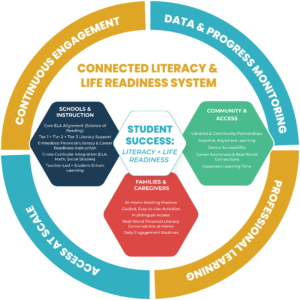
Footsteps2Brilliance provides a unified approach that:
- Connects learning from birth through 8th grade
- Aligns ELA instruction with financial literacy development
- Engages families as partners in learning
- Provides real-time visibility into outcomes
The Connected Literacy & Life Readiness System
by Footsteps2Brilliance
The Bottom Line
Districts don’t need more programs.
They need systems that work together.