When does literacy begin?
Most people say preschool.
Some say kindergarten.
Research—and reality—say something very different:
Literacy begins at birth.
And when we wait, even a little, we fall behind.
The First Years Are Not Preparation—They Are the Foundation
A child’s brain develops faster in the first years of life than at any other time.
During this window:
- Neural connections form at extraordinary speed
- Language pathways are built through interaction
- Vocabulary, comprehension, and thinking begin to take shape
What happens—or doesn’t happen—during these early months and years sets the trajectory for everything that follows.
In fact, research shows that socioeconomic gaps in development begin early, driven in large part by differences in parent-child interactions and beliefs about early learning.
This means:
By the time children enter school, gaps aren’t forming—they’re already formed.
The Awareness Gap: What Families Don’t Know Is Holding Students Back
One of the biggest challenges isn’t lack of care—it’s lack of awareness.
- Nearly 50% of parents underestimate when reading supports development—by as much as 18 months
- Many believe talking to children matters later—not at birth
- Others don’t realize that play, conversation, and interaction are actually learning
Even more striking:
Parent beliefs alone explain 18.7% of the variation in child language development.
That’s not a small factor.
That’s a system-level lever.
If we want to change outcomes for children, we must first change what families know, believe, and do—starting at birth.
Early Literacy Is Not About Worksheets—It’s About Interaction
At birth, literacy doesn’t look like reading words on a page.
It looks like:
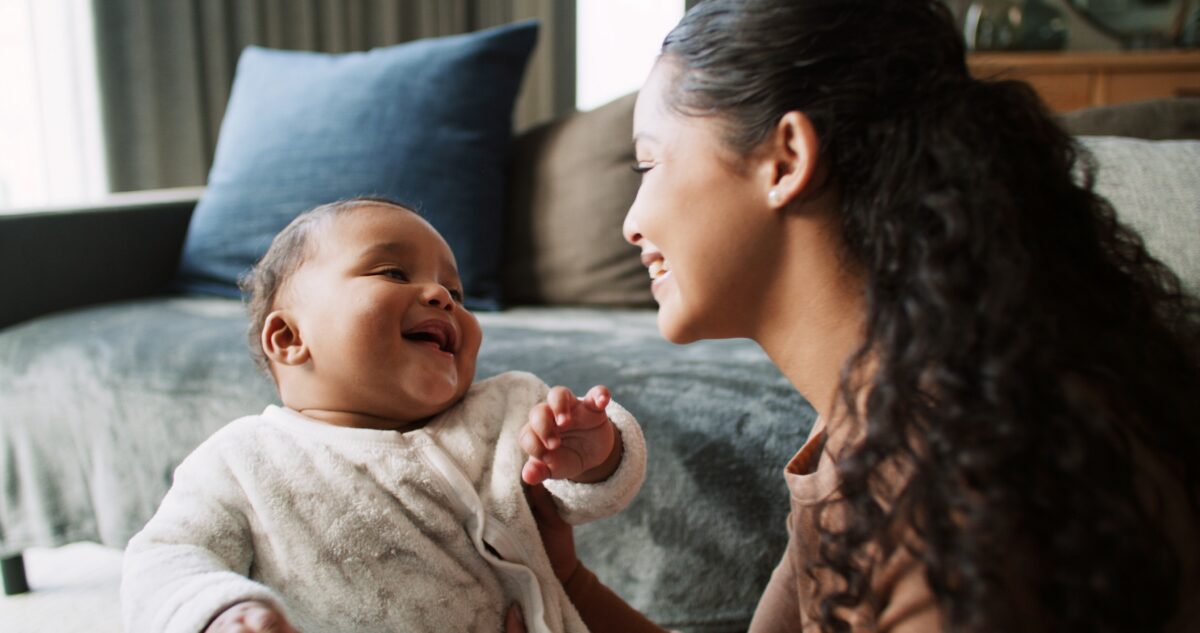
- Talking to a baby
- Singing songs and nursery rhymes
- Responding to sounds and gestures
- Playing, pretending, and exploring together
These moments build:
- Language and communication
- Cognitive development
- Social-emotional skills
- The foundation for reading and writing
That’s why early childhood experts consistently emphasize four critical domains:
- Language
- Thinking
- Movement
- Feelings
These domains are universally recognized—and they form the backbone of how children learn and grow in the first years of life.
The Problem: Most Systems Start Too Late
Despite what we know, most educational systems:
- Begin formal literacy efforts at PreK or Kindergarten
- Focus on intervention after students fall behind
- Treat families as secondary instead of essential
But if gaps start at birth, then:
Starting at age 4 is already years too late.
The Solution: A Birth–5 Model That Builds Literacy from Day One
This is where a new approach is required—one that doesn’t wait for school to begin.
Footsteps2Brilliance has built a Birth–5 literacy model designed to meet children and families where learning actually starts: at home, from the very beginning.
- Learning Begins with Families
The model is built on a simple but powerful idea:
Caregivers are a child’s first and most important teacher.
Through an easy-to-use, device-agnostic platform, families can:
- Access bilingual books, songs, and nursery rhymes
- Engage in simple, guided activities
- Understand why each activity matters (“Bee-hind the Learning”)
- Track their child’s development in real time
This doesn’t just provide content—it builds confidence and capability in caregivers
- A Developmentally Aligned Birth–5 Progression
The Footsteps2Brilliance model meets children exactly where they are:
- 0–8 months (Newborn stage): sensory experiences, sound recognition
- 8–18 months: early language interaction and engagement
- 18–36 months: vocabulary, exploration, and communication
- 36–48 months: pre-reading and structured language development
- 4–5 years: transition to reading, writing, speaking, and listening
Each stage includes:
- Age-appropriate books and songs
- Hands-on, off-device activities
- Opportunities for repeated interaction and practice
This creates a continuous, coherent pathway from birth to reading.
- Learning That Extends Beyond the Screen
One of the most important—and often overlooked—elements:
The learning doesn’t stay on the device.
Each digital experience is paired with:
- Real-world activities
- Parent-child interaction
- Opportunities to apply skills in everyday life
Families can even mark activities as completed (“We did this!”), allowing the system to track skill development across domains.
This bridges the gap between digital learning and real-life development.
- Real-Time Progress Tracking from Birth
Most systems wait until students are tested to understand progress.
This model tracks development from the very beginning.
Caregivers and stakeholders can see:
- How many books have been read
- How often skills are practiced
- Growth across Language, Thinking, Movement, and Feelings
This creates something powerful:
A continuous feedback loop that supports development—not just measures it.
The Outcome: Kindergarten Readiness That Starts Years Earlier
When literacy begins at birth and is reinforced consistently:
- Children enter school with stronger vocabulary
- They understand how language works
- They are more confident communicators
- They are ready to learn—not catch up
The model drives:
- Earlier shared reading
- Increased language interaction
- Stronger cognitive and social-emotional development
- Improved kindergarten readiness
From Fragmentation to Ownership: How States and Districts Are Leading the Birth-to-5 Literacy Movement
Across the country, governors and state leaders are beginning to recognize that kindergarten readiness and 3rd-grade reading proficiency are not K–3 problems—they are birth-to-5 challenges.
As a result, more funding is being directed toward early language and literacy initiatives that start well before children enter school. Historically, no single entity “owned” this space. Early childhood development was fragmented across families, childcare providers, community organizations, and schools—often leaving gaps in access and consistency.
But that is changing.
School districts are stepping into a new leadership role, recognizing the long-term impact of early intervention and the power of aligned systems. By forming partnerships with families, caregivers, healthcare providers, and community organizations, districts are beginning to build collective impact models that ensure every child has access to high-quality learning experiences from birth.
Initiatives like those powered by Footsteps2Brilliance are helping communities move from fragmented efforts to coordinated systems—where districts don’t just serve students once they arrive at school, but actively support learning from day one, finally taking ownership of the full literacy journey
Final Thought: The Clock Starts at Birth—So Should We
The biggest mistake we can make in education is believing we have more time.
We don’t.
By the time a child enters kindergarten:
- Their brain has already built the foundation for literacy
- Their language exposure has already shaped their trajectory
- Their readiness is already influenced by early experiences
The question is no longer when should literacy begin?
The question is:
How quickly can we ensure every child gets the right start—from birth?
Join the Action Today!
Ready to build a birth-to-5 literacy system that engages families, accelerates language development, and drives kindergarten readiness?
Explore how Footsteps2Brilliance helps communities support every child, every step, everywhere.