
The Question Every Curriculum Director Is Being Asked
“Is it working?”
District leaders, boards, and communities are no longer satisfied with:
- Usage reports
- Completion rates
- Engagement metrics
They want evidence of impact.
And curriculum directors are on the front lines of answering that question.
The Problem with Traditional Metrics
Most literacy solutions report:
- Minutes used
- Lessons completed
- Logins
But these don’t answer the real question:
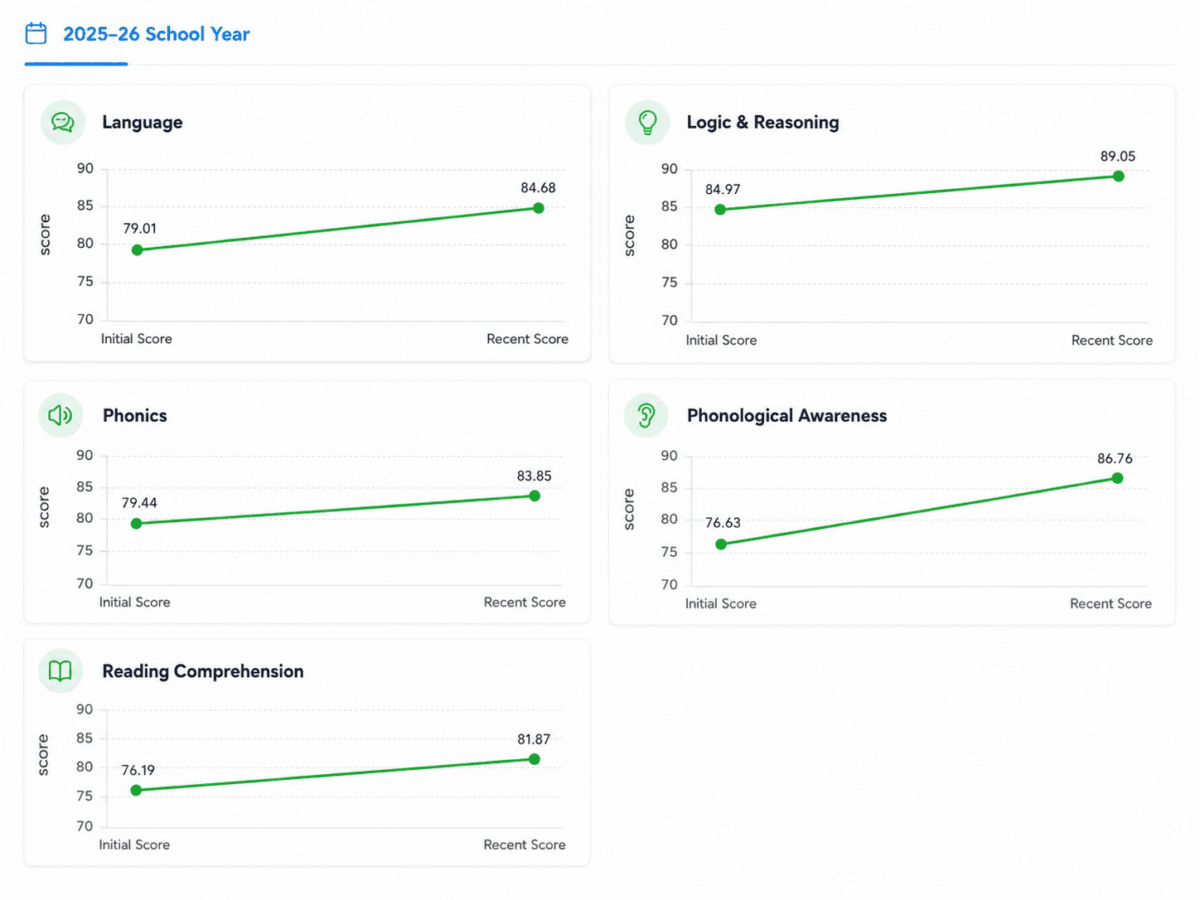
Are students becoming stronger readers—and more capable thinkers?
What Meaningful Literacy Evidence Looks Like
In today’s environment, effective measurement should include:
- Foundational Skill Growth
- Progress in early literacy development
- Strength in comprehension and language
- Longitudinal Progress
- Increased kindergarten readiness
- Growth sustained from early grades into middle school
- Application of Learning
- Ability to use literacy skills in real-world contexts
- Decision-making and critical thinking
- Family Engagement Impact
- Frequency and quality of home learning interactions
- Correlation between engagement and student outcomes
Why This Matters More Now
State policies, accountability systems, and funding decisions are increasingly tied to:
- Demonstrable outcomes
- Evidence-based practices
- Return on investment
Curriculum leaders need tools that provide clear, actionable, and defensible data.
Moving from Engagement to Evidence
The shift happening in districts is clear:
From:
“We implemented the program.”
To:
“We can show the results.”
A Better Approach to Measuring Impact
Footsteps2Brilliance supports districts with:
- Real-time visibility into literacy development
- Insights across birth through 8th grade
- Data tied to both:
- ELA proficiency
- Real-world literacy (financial understanding)
- Reporting that supports:
- MTSS frameworks
- Leadership communication
- Board-level presentations
The Result
Curriculum directors gain the ability to:
- Track meaningful progress
- Identify areas of need early
- Demonstrate impact with confidence
And most importantly:
Answer the question—“Is it working?”—with data.
Next Step: