A Birth–8th Grade Strategy for Literacy, Financial Readiness, and Measurable District Outcomes
Across the United States, school districts are facing increasing pressure to improve literacy outcomes while preparing students for real-world success. Despite significant investments in curriculum, intervention, and professional development, many districts continue to see inconsistent results.
The core issue is not a lack of resources—it is a lack of system-wide alignment.
This white paper outlines a birth–8th grade strategy that connects early literacy, family engagement, and financial literacy into a unified system that delivers measurable outcomes. It provides district leaders with a framework to move from fragmented initiatives to a cohesive approach that improves both academic and life readiness outcomes.
The Challenge: Why Current Approaches Fall Short
Fragmented Systems Limit Impact
Most districts operate multiple literacy-related initiatives, including:
Early childhood programs
Core ELA curriculum
MTSS and intervention systems
Family engagement efforts
Emerging financial literacy requirements
While each initiative may be effective independently, they are rarely designed to work together as a unified system.
The Resulting Gaps
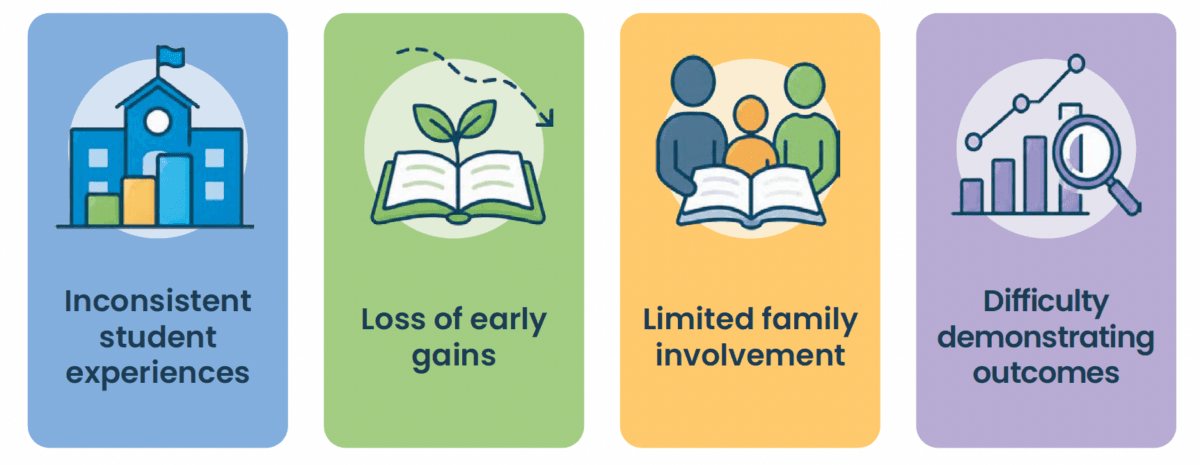
This fragmentation leads to:
Inconsistent student experiences across grade levels
Loss of early literacy gains over time
Limited family involvement in daily learning
Difficulty demonstrating measurable outcomes
MARKET TRENDS DRIVING CHANGE
(2026 AND BEYOND)
Earlier Intervention is Critical
Research consistently shows that literacy gaps begin before 3rd grade, making early investment essential.
Literacy Must Extend Beyond Reading
States are increasingly requiring financial literacy and life readiness skills, especially in grades 4–8.
Accountability is Increasing
Districts must demonstrate:
Evidence of impact
Return on investment (ROI)
Alignment to standards and mandates
Family Engagement is a Priority—But Hard to Scale
Districts recognize its importance but struggle to implement it consistently and effectively.
A NEW MODEL:
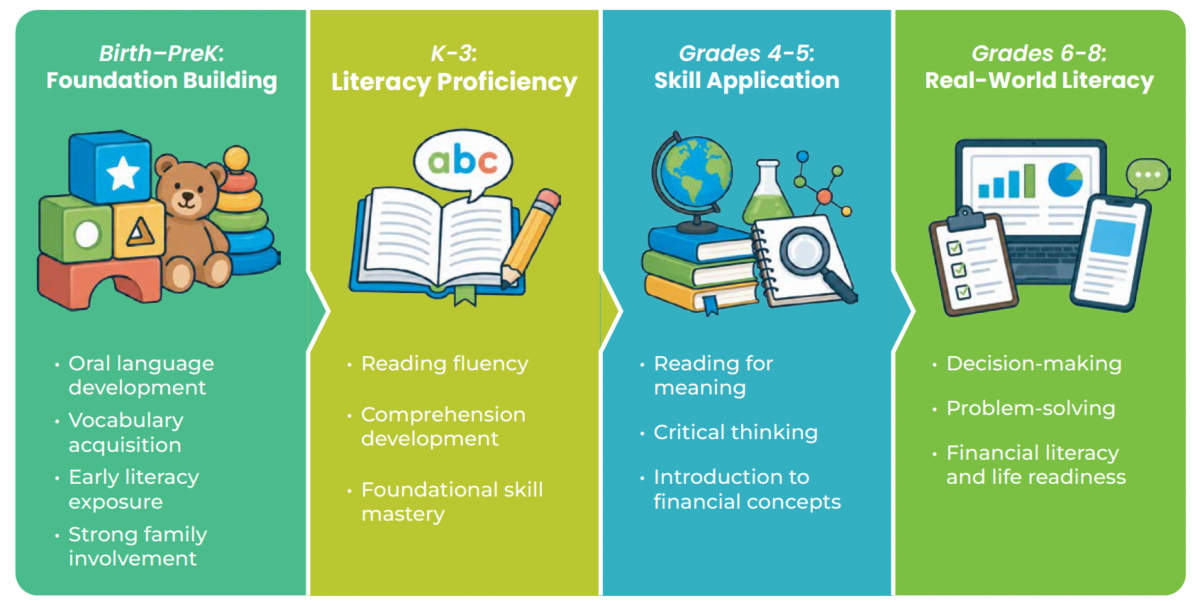
THE BIRTH–8TH GRADE CONTINUUM
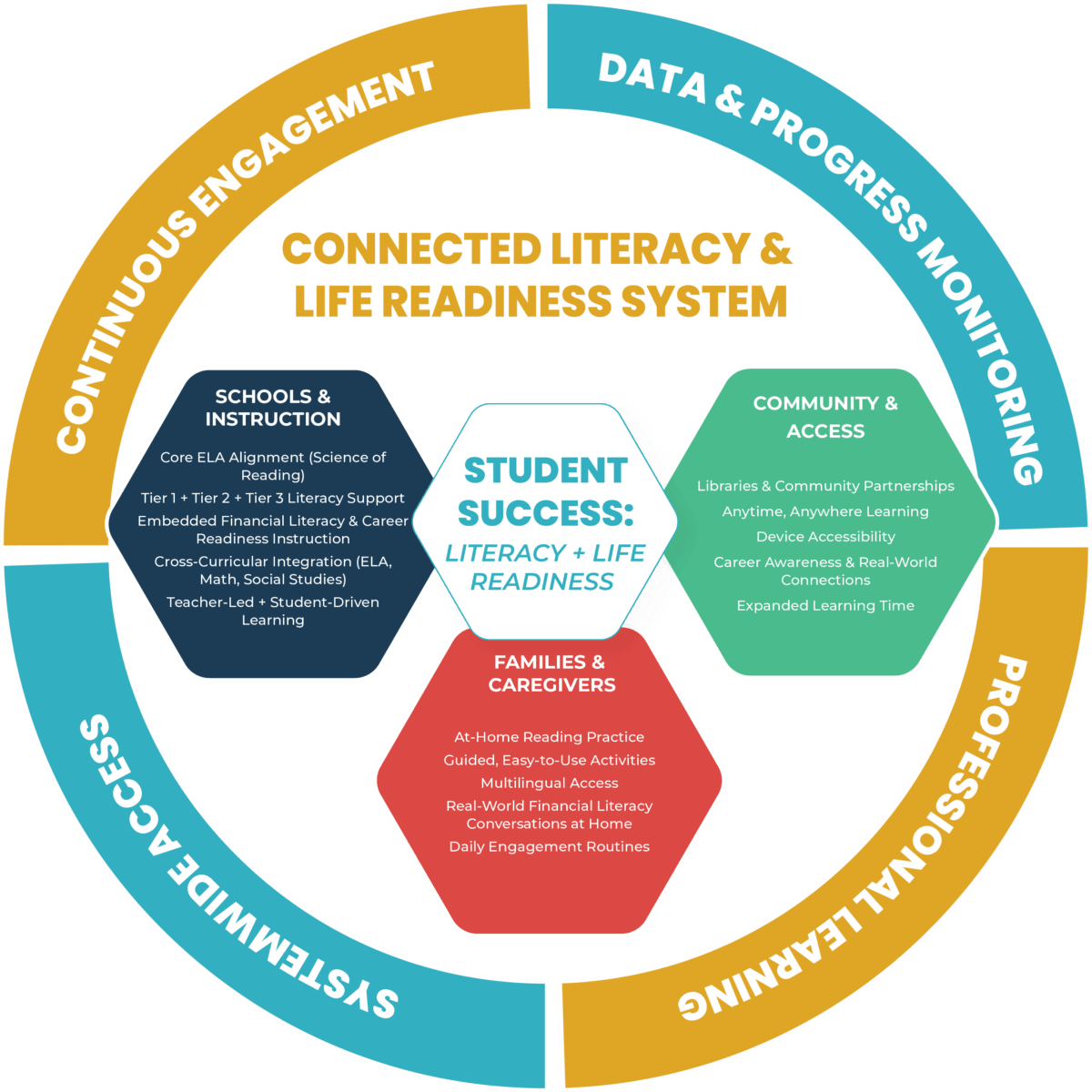
To meet these demands, districts must move from disconnected programs to a coherent literacy system.
What this looks like:
THE MISSING LINK:
CONNECTING HOME, SCHOOL, AND REAL LIFE
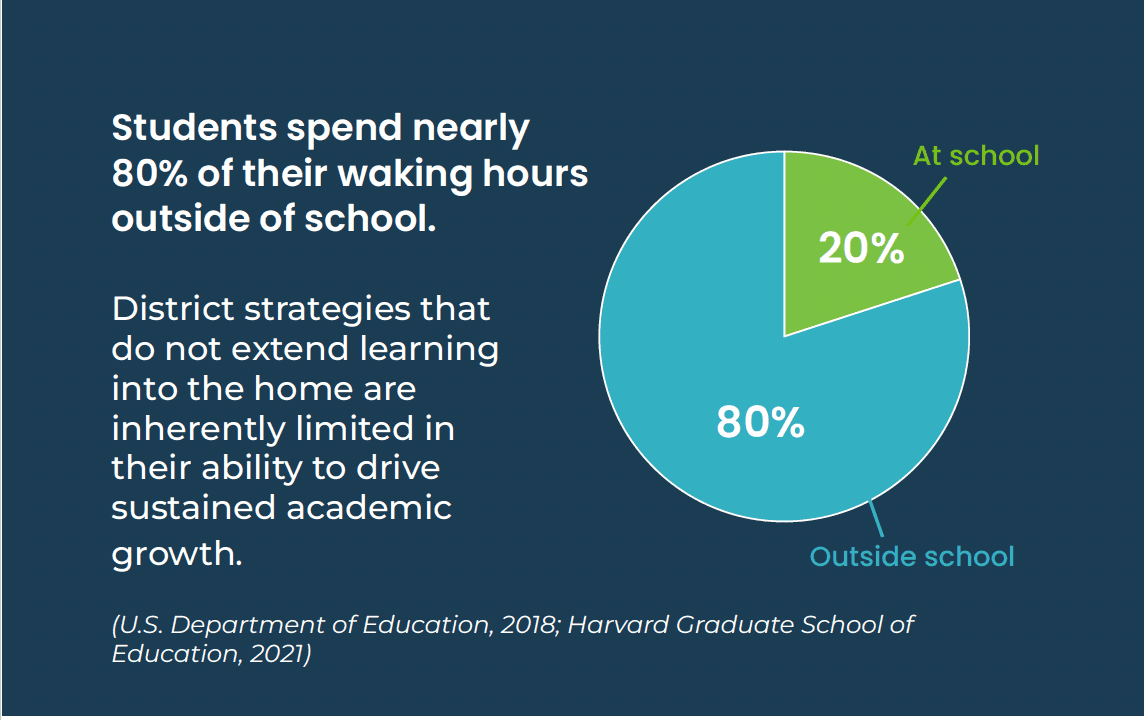
One of the most overlooked factors in literacy success is what happens outside the classroom.
The Reality:
Students spend the majority of their time outside of school.
The Opportunity:
Districts that extend learning into the home see:
Increased literacy growth
Higher engagement
Stronger skill retention
What Effective Extension Requires:
Simple, guided activities for families
Alignment with classroom instruction
Daily reinforcement opportunities
FROM ENGAGEMENT TO EVIDENCE:
WHAT DISTRICTS MUST MEASURE
Traditional metrics are no longer sufficient.
Districts Need Visibility Into:
Literacy Growth
Reading proficiency
Comprehension development
2. Longitudinal Progress
Sustained growth across grade levels
3. Real-World Application
Ability to apply literacy skills in decision-making
4. Family Engagement Impact
Participation rates
Correlation with student outcomes
THE SOLUTION:
A CONNECTED SYSTEM APPROACH
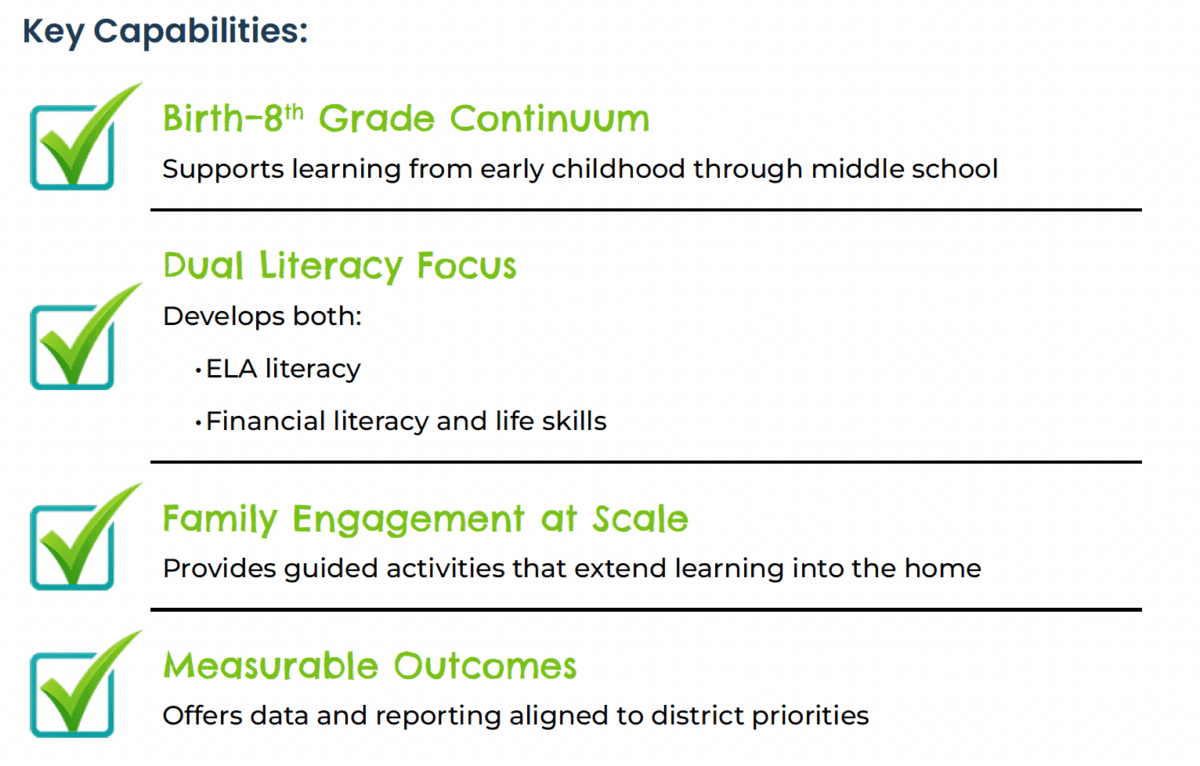
A modern literacy solution must:
Start at birth
Extend through middle school
Integrate ELA and financial literacy
Engage families consistently
Provide real-time, actionable data
HOW FOOTSTEPS2BRILLIANCE SUPPORTS DISTRICTS
Footsteps2Brilliance is designed as a district-wide system that addresses these needs.
DISTRICT IMPACT
Districts implementing a connected system approach report:
Stronger early literacy foundations
Increased family engagement
Sustained academic growth
Reduced need for intervention
Improved confidence in reporting outcomes
MAXIMIZING ROI
A unified system reduces:
Redundant programs
Implementation complexity
Total cost of ownership
While increasing:
Instructional alignment
Student outcomes
Long-term impact both academically and economically
CONCLUSION:
THE OPPORTUNITY FOR DISTRICT LEADERS
Districts that succeed in the coming years will not be those with the most programs— but those with the most connected systems.
By starting earlier, aligning efforts across grade levels, and extending learning beyond the classroom, districts can:
Improve literacy outcomes
Prepare students for real-world success
Demonstrate measurable impact
Start Early.
Connect
Everything.
Prove the
Impact.
Bibliography
Foundational Literacy & Early Learning
National Early Literacy Panel (2008). Developing Early Literacy: Report of the National Early Literacy Panel. https://lincs.ed.gov/publications/pdf/NELPReport09.pdf
National Institute for Literacy (2008). Developing Early Literacy: A Scientific Synthesis of Early Literacy Development.
Annie E. Casey Foundation (2023). Early Warning! Why Reading by the End of Third Grade Matters. https://www.aecf.org
Science of Reading & Literacy Outcomes
Institute of Education Sciences (2020). Foundational Skills to Support Reading for Understanding in Kindergarten Through 3rd Grade.
RAND Corporation (2022). Understanding the Impact of Literacy Interventions in K–12 Education.
Family Engagement & Learning Extension
Harvard Graduate School of Education (2021). The Case for Family Engagement in Education. https://www.gse.harvard.edu
National PTA (2020). Family Engagement and Student Success Research Brief.
U.S. Department of Education (2018). Dual Capacity-Building Framework for Family-School Partnerships.
Financial Literacy & Life Readiness
Council for Economic Education (2024). Survey of the States: Economic and Personal Finance Education in Our Nation’s Schools. https://www.councilforeconed.org
Jump$tart Coalition for Personal Financial Literacy (2022). National Standards for Personal Financial Education.
OECD (2021). PISA Financial Literacy Results.
K–12 Trends, ROI, and Systems Alignment
McKinsey & Company (2023). Education to Employment: Designing a System that Works.
Brookings Institution (2022). How to Improve Student Outcomes Through System-Level Change.
Education Trust (2023). The State of Equity in Education.